
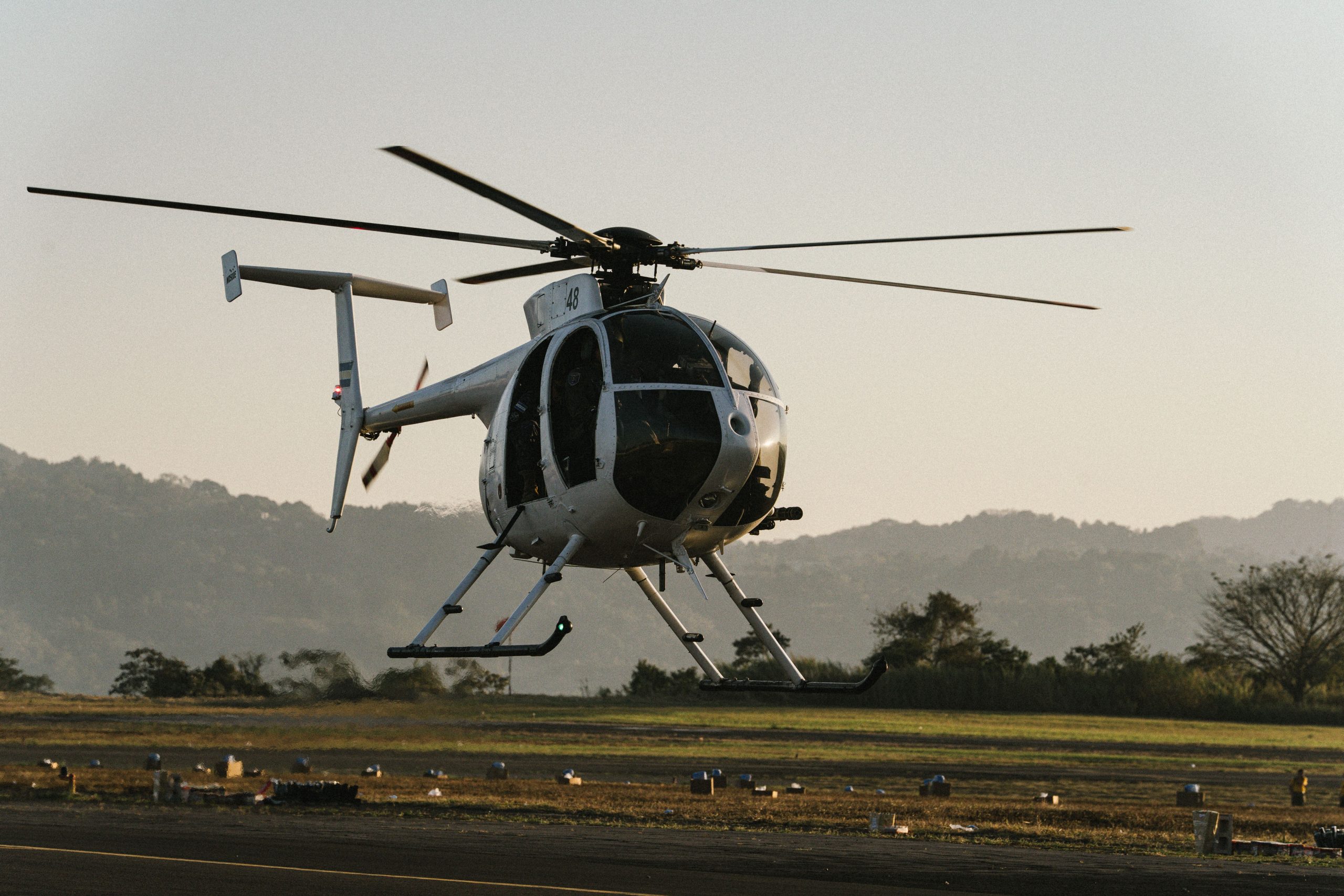
PISTON HELICOPTER FINANCING IS AVAILABLE
AVIATION LOAN MATCHING SERVICE
Compare jet loan offers from
specialty aviation lenders.
- No cost to you
- Private & secure
No Cost to You
Aviation Specialists
One Application
Multiple offers side-by-side
Loan Programs
Financing for every aircraft type
New Aircraft Purchase
Pre-Owned Jet Financing
Aircraft Refinancing
Operating Leases
Engine & Maintenance Reserve
Fractional & Shared Ownership
How It Works
A simple, confidential four-step
process
Tell Us About the Aircraft
Make, model, year, intended use, ownership structure. No commitment.
Get Matched
Compare Offers
Close & Take Delivery
Estimate Your Monthly Payment
Move the sliders to see how loan amount, term, and rate shape your monthly cost. Illustrative estimates only — your actual offer depends on your matched lender.
Rate slider is for illustration only. Actual rates vary by aircraft, age, hours, ownership structure, lender, and credit profile.
Illustrative estimates only. Not an offer of credit. Actual terms determined by lender.
Financing for private and
corporate aviation
Private Owners
Corporations
Charter Operators
Fractional Owners
Management Companies
Family Offices
A lending network built for
aviation
Aviation-Specific Underwriting
One Profile, Multiple Offers
No Cost. No Commitment.
Confidential & Discreet
Ready to compare aircraft financing offers?
BELOW THIS LINE IS FOR SEO RANKING AND INFORMATION PURPOSES!!!
Aviation Financing in 2026: Cessna Aircraft, Helicopters, Business Jets, and Hangar Funding
Aircraft ownership can involve several different financial requirements at the same time. A buyer may need capital to purchase an airplane or helicopter, construct or acquire a hangar, modernize avionics, fund inspections, and maintain adequate operating reserves after closing. The right strategy depends on the aircraft, borrower, mission, transaction size, and expected ownership period.
General aviation also covers dramatically different assets. A piston-powered rotorcraft has different operating economics from a single-engine training airplane, while a Citation business jet introduces substantially higher acquisition, crew, maintenance, and operating requirements. Real estate and hangar projects add another layer because the useful life and underwriting considerations for property are different from those associated with an aircraft.
Owners should therefore analyze the complete aviation investment rather than focusing exclusively on an advertised payment or interest rate. Acquisition cost, inspections, engines, avionics, insurance, maintenance, storage, training, professional services, construction, and liquidity all deserve consideration.
The following nine sections explain how prospective owners can evaluate these different aviation expenses while preparing for financing and protecting their long-term financial position.
1. Match the Financing Strategy to the Aircraft Mission
Applicants evaluating Piston helicopter financing should first determine how the helicopter will be used, including passenger requirements, payload, expected annual flight hours, operating environment, and storage needs.
Individuals and businesses seeking Cessna aircraft loans should identify the particular model and mission because financing a small piston airplane can differ substantially from funding a turbine-powered aircraft.
Companies considering aircraft hangar financing should determine whether they intend to purchase an existing facility, construct a new building, improve leased airport property, or acquire qualifying aviation real estate.
Organizations pursuing Cessna Citation financing should evaluate the jet’s required range, passenger capacity, cabin configuration, expected utilization, airport requirements, and long-term ownership objectives.
Prospective owners comparing Cessna Skyhawk loan rates should consider the complete financing proposal rather than assuming the lowest quoted percentage automatically creates the best overall transaction.
For additional aviation financing information, prospective applicants can explore MachLend.com.
2. Establish the Complete Acquisition Budget
Borrowers researching Piston helicopter financing should budget for more than the negotiated purchase price, including inspection expenses, insurance, training, immediate maintenance, component work, and operating reserves.
Applicants pursuing Cessna aircraft loans should similarly calculate potential expenses for the engine, propeller, avionics, annual inspections, storage, insurance, training, and initial repairs.
Businesses seeking aircraft hangar financing should account for acquisition or construction costs as well as utilities, site preparation, engineering, permits, specialized doors, insurance, and other property-related expenses.
Companies arranging Cessna Citation financing should prepare for substantially larger operating requirements involving professional crew where applicable, training, maintenance programs, engines, insurance, fuel, management, and hangar costs.
Someone researching Cessna Skyhawk loan rates should calculate how the proposed down payment, repayment period, financing charges, and other costs affect both monthly cash flow and total repayment.
A complete aviation budget can prevent an owner from spending nearly all available cash on acquisition while leaving too little liquidity for ownership expenses.
3. Conduct Aircraft-Specific Due Diligence
Before finalizing Piston helicopter financing, buyers should consider an appropriate pre-purchase inspection and review maintenance records, engine condition, rotor-system information, component status, inspection history, and installed equipment.
Applicants for Cessna aircraft loans should examine logbooks, maintenance history, engine and propeller status, airframe condition, avionics, modifications, and overall aircraft records.
Businesses considering aircraft hangar financing should perform appropriate due diligence concerning property ownership or leasehold rights, access, zoning or permitted uses, utilities, physical condition, and airport requirements.
Companies pursuing Cessna Citation financing should investigate engines, maintenance programs, upcoming inspections, avionics, cabin condition, installed equipment, records, and the individual aircraft’s operating history.
A buyer comparing Cessna Skyhawk loan rates should not allow financing considerations to replace aircraft due diligence because a seemingly inexpensive airplane may require significant maintenance shortly after acquisition.
Official registration information is available through the FAA Aircraft Registry, and broader federal aviation information is available through the FAA Aircraft portal.
4. Compare Payments and Total Financing Costs
Applicants evaluating Piston helicopter financing should compare financing charges, fees, required contribution, repayment length, collateral requirements, and prepayment provisions.
Borrowers shopping for Cessna aircraft loans should use consistent loan amounts and repayment periods whenever possible so competing proposals can be compared more accurately.
Businesses reviewing aircraft hangar financing should recognize that property-related structures may differ from aircraft loans and should compare options according to the specific real estate or construction project.
Companies considering Cessna Citation financing should model debt service together with annual operating costs to determine whether the complete aviation budget remains sustainable.
Prospective purchasers reviewing Cessna Skyhawk loan rates should calculate total repayment because a longer term may reduce the monthly payment while increasing financing expense over time.
Consider a hypothetical $200,000 balance amortized over seven years:
| Illustrative Rate | Approx. Monthly Payment | Approx. Total Repaid |
|---|---|---|
| 6% | $2,922 | $245,448 |
| 7% | $3,019 | $253,596 |
| 8% | $3,117 | $261,828 |
| 9% | $3,218 | $270,312 |
| 10% | $3,321 | $278,964 |
Illustrative Monthly Payment Graph
Hypothetical monthly payments on a $200,000 balance.
Educational illustration only. These figures are not current lender quotes, advertised market averages, or guaranteed terms.
The calculations above are hypothetical examples rather than actual financing offers. Pricing depends on the applicant, aircraft, provider, loan structure, collateral, and market conditions.
5. Plan for Maintenance Before Closing
Owners using Piston helicopter financing should maintain reserves for engines, rotor systems, transmissions, components, inspections, avionics, and unexpected mechanical discrepancies.
Applicants repaying Cessna aircraft loans should prepare for annual inspections, engine and propeller work, avionics maintenance, insurance, storage, subscriptions, and unplanned repairs.
Businesses with aircraft hangar financing should also budget for facility maintenance, doors, roofing, utilities, insurance, pavement, security systems, and other property expenses.
Companies carrying Cessna Citation financing should pay particular attention to engine condition, inspection intervals, maintenance-program status, component requirements, and substantial scheduled events.
Owners comparing Cessna Skyhawk loan rates should make sure that selecting a larger down payment does not unnecessarily reduce reserves required to maintain the aircraft after closing.
Maintenance spending does not normally occur in perfectly predictable monthly amounts. An aircraft may operate inexpensively for a period before requiring a significant mechanical or inspection-related expenditure.
6. Evaluate Avionics and Aircraft Improvements
An owner considering Piston helicopter financing should determine whether communications equipment, avionics, navigation systems, and mission equipment are suitable for the intended operation.
Applicants obtaining Cessna aircraft loans should identify any desired avionics, interior, paint, engine, propeller, or equipment upgrades before determining the true acquisition budget.
Businesses arranging aircraft hangar financing should consider whether the facility requires electrical upgrades, climate control, office areas, maintenance space, fire-protection systems, or other improvements appropriate to its intended use.
Companies seeking Cessna Citation financing should assess cabin connectivity, avionics, communications systems, entertainment equipment, furnishings, paint, and other modernization requirements before purchase.
Someone studying Cessna Skyhawk loan rates should consider whether the aircraft already contains the desired equipment because extensive post-purchase improvements can alter the effective acquisition cost.
Aircraft modifications can involve installation, engineering, testing, and certification considerations. Owners can review the FAA Aircraft Certification resources and consult appropriately qualified aviation professionals for project-specific requirements.
7. Consider Hangars and Aviation Real Estate Separately
Borrowers pursuing Piston helicopter financing may also need secure storage, but the financing strategy for the rotorcraft itself should generally be analyzed separately from any real estate transaction.
Applicants using Cessna aircraft loans should compare the economics of renting hangar space with owning or developing a facility when long-term storage requirements justify such an analysis.
Companies exploring aircraft hangar financing should determine whether the project involves fee-simple ownership, a ground lease, existing improvements, new construction, or renovation because these distinctions can affect the transaction.
Businesses seeking Cessna Citation financing may place greater importance on dedicated hangar capacity because valuable turbine aircraft can require specialized storage, security, and support facilities.
A buyer comparing Cessna Skyhawk loan rates should avoid letting a relatively small aircraft payment obscure the separate cost of storage, particularly at airports where hangar availability is limited.
Eligible businesses considering qualifying owner-occupied fixed assets can also review the SBA 504 Loan Program. Eligibility, permitted uses, lender underwriting, and other program requirements apply.
8. Preserve Liquidity Throughout Ownership
Applicants obtaining Piston helicopter financing should maintain cash reserves appropriate for maintenance, insurance, fuel, training, storage, inspections, and component-related expenses.
Borrowers using Cessna aircraft loans should stress-test their budgets against unexpected engine, propeller, avionics, airframe, or inspection costs.
Businesses taking on aircraft hangar financing should preserve capital for property repairs, utilities, insurance, construction contingencies, and other facility expenses rather than committing every available dollar to the project.
Companies repaying Cessna Citation financing should consider the combined effect of aircraft payments, fuel, crew, maintenance, training, insurance, management, hangar costs, and periods of reduced utilization.
Prospective buyers analyzing Cessna Skyhawk loan rates should determine how much unrestricted cash remains after the down payment and initial ownership expenses rather than evaluating affordability solely by the monthly payment.
Adequate liquidity provides flexibility when several aviation costs arise at once. Financing the asset successfully is only the first step; the owner also needs sufficient capital to operate and maintain it.
9. Prepare a Complete Application Package
Applicants seeking Piston helicopter financing should organize requested financial information, aircraft specifications, purchase documents, ownership information, and details concerning the intended mission.
Borrowers pursuing Cessna aircraft loans should be prepared to provide the aircraft model, purchase price, requested amount, proposed contribution, intended use, and other documents required by the prospective provider.
Companies applying for aircraft hangar financing may need property information, construction budgets, plans, contractor documentation, lease or ownership records, and financial statements depending on the transaction.
Organizations requesting Cessna Citation financing should expect a more detailed review for high-value transactions and should prepare financial statements, liquidity documentation, organizational records, aircraft information, and purchase documents as requested.
Applicants researching Cessna Skyhawk loan rates should request current written terms from prospective providers and compare financing charges, repayment obligations, fees, collateral provisions, and prepayment requirements.
Approval, rates, fees, financing amounts, required contributions, collateral requirements, and repayment structures depend on underwriting and the individual transaction. No applicant should assume approval until a provider has completed its review.
For additional internal aviation resources, visit MachLend.com. Independent information is available through the FAA Aircraft portal, FAA Aircraft Registry, and FAA Aircraft Certification resources.
Final Thoughts
Aviation financing should begin with the intended mission and the specific asset. A piston-powered rotorcraft, single-engine training airplane, turbine business jet, and airport hangar can each require a substantially different financial approach.
The purchase price is only one component of aircraft ownership. Inspection expenses, maintenance, insurance, engines, propellers or rotor components, avionics, training, fuel, storage, professional services, and operating reserves can materially affect affordability.
Aircraft-specific due diligence remains important regardless of price. Maintenance records, component condition, inspection history, equipment, modifications, airframe condition, and aircraft documentation can reveal costs that are not obvious from an advertisement.
Large business aircraft require particularly careful cash-flow planning because operating expenses can be substantial even when utilization temporarily declines. Smaller general-aviation airplanes can also generate large unexpected expenses relative to their market value.
Hangar projects should be evaluated independently from aircraft acquisitions. Property rights, ground leases, construction requirements, utilities, permitting, insurance, maintenance, and long-term airport access can all influence the economics of a facility.
Borrowers should compare financing structures based on complete economic terms rather than one percentage or payment. Required contributions, fees, repayment duration, collateral requirements, prepayment provisions, and total expected repayment all matter.
Owners should also preserve sufficient liquidity. An unexpected engine problem, major inspection, construction overrun, or avionics failure can create a substantial capital need soon after a transaction closes.
Qualified aviation inspectors, mechanics, attorneys, tax professionals, real estate professionals, contractors, appraisers, brokers, insurance advisers, and financing providers can provide specialized guidance for individual transactions.
A thoughtful aviation capital strategy combines mission analysis, realistic budgeting, asset-specific due diligence, careful financing comparisons, maintenance planning, facility planning, and enough liquidity to support both the aircraft and its infrastructure throughout ownership.